The fête of farmers

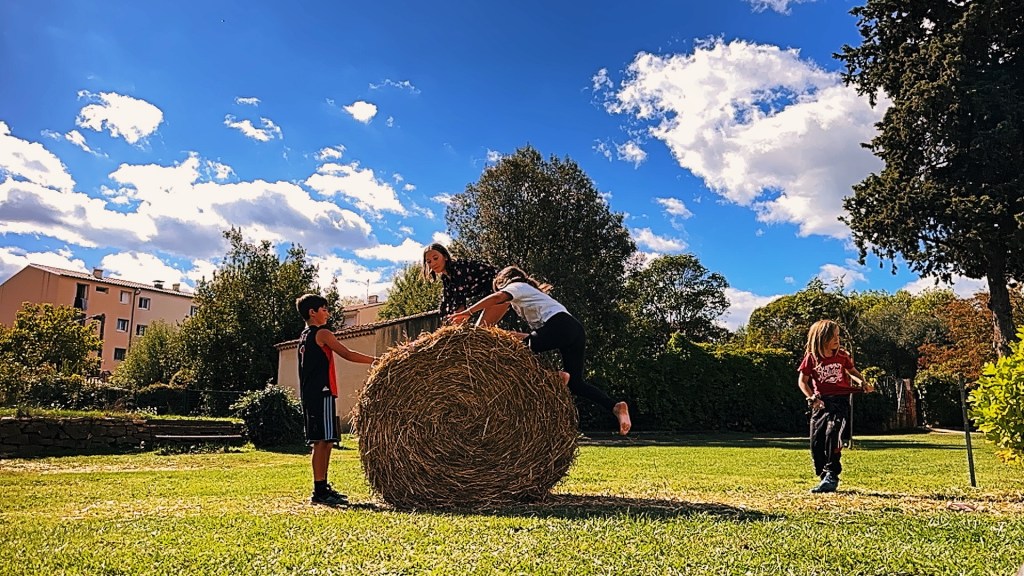
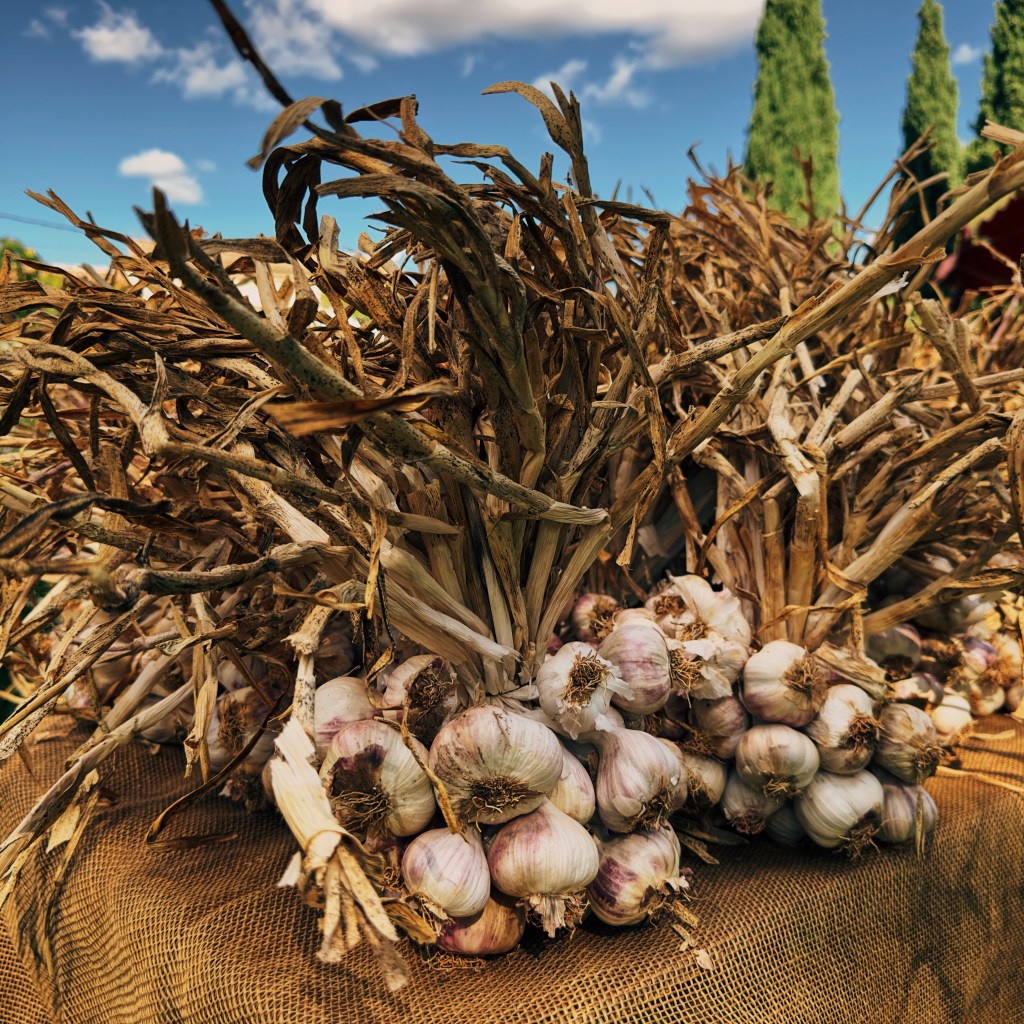
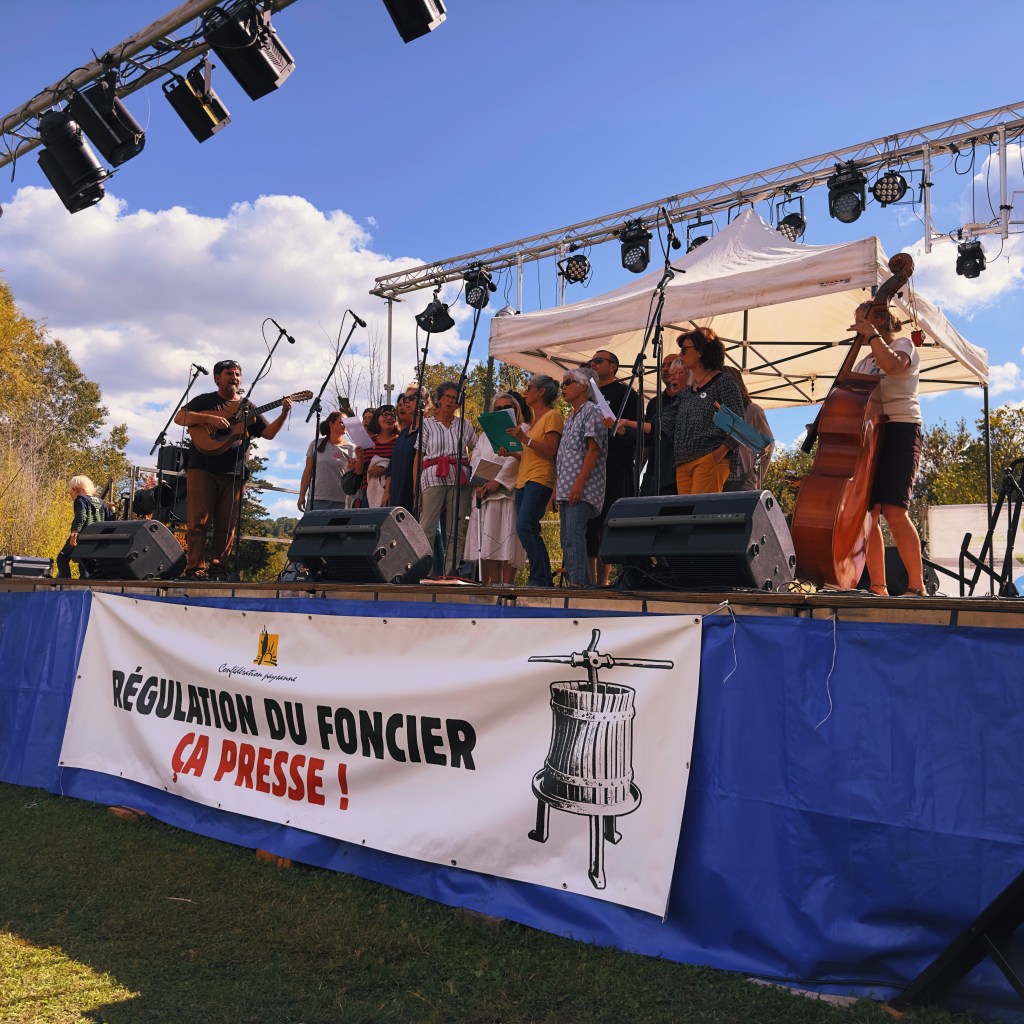
No wonder the spirit of resistance is forever linked to France. At the Fête de l’agriculture Paysanne this weekend the verve of underground activity was alive and well, manifesting in much more than the delicious produce ‘peasant’ farmers were united in producing. The honey and cheese, basket making and fresh vegetables were a sunny welcome, reflecting the effort of their making and the pleasure of their sharing. But the organic purpose of the day was to bring together people of shared vision to grow and defend the future of community based farming. With noticeable distinction, women led the event, their feminal common sense fighting for small and diverse livelihoods against huge and homogenised landlords. Family versus big farma.

How I love to be in the company of gritty optimistic women – especially those in the silver sixties! This is the median age of farmers in France according to Isabelle from The field of possibilities (Le champ des possibles), a farm of one hectare in Le Pradet. She joins a syndicate of many small farmers who advocate for land regulation where, say, 3 farmers could feed 3 families, rather than one big business occupying land not intended to feed people nearby. The problem is worldwide, super markets dominate our options (I challenge you to find fresh milk at Aldi or Lidl in France!), so how inspiring it is to discover a small French farming syndicate that says their primary role is to defend ideas…

The sausage sizzle would have alerted everyone within cooee to the fete. The smell of the barbecue – and the sweet crepes – was as enticing as the rousing songs from the stage. And with Provence currently celebrating 80 years since liberation, there is still reason to resist, this time from the front line. I’ll be sure to show my solidarity one farmer’s market at a time. See you there!

Posted in events, markets, travel | Tagged , , , , , , , , | 4 Comments

Sunday in the sun

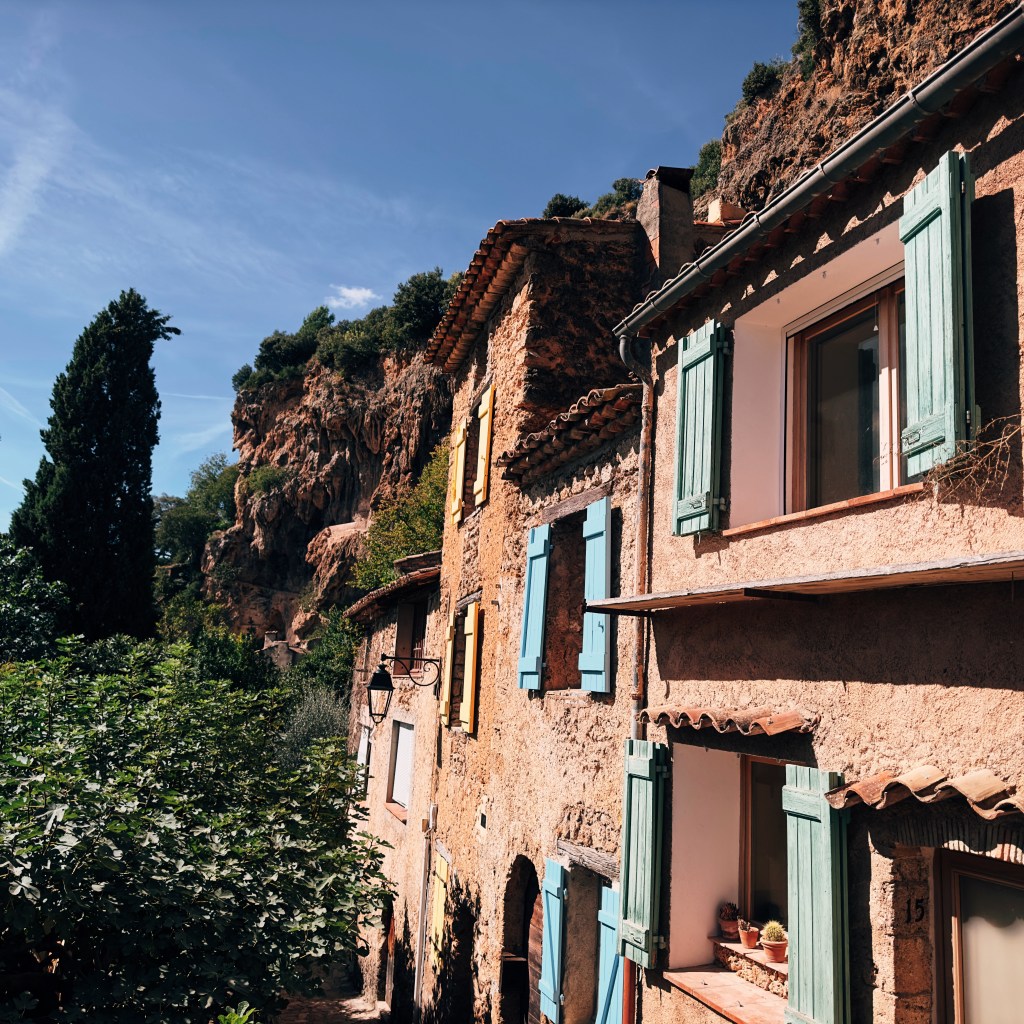
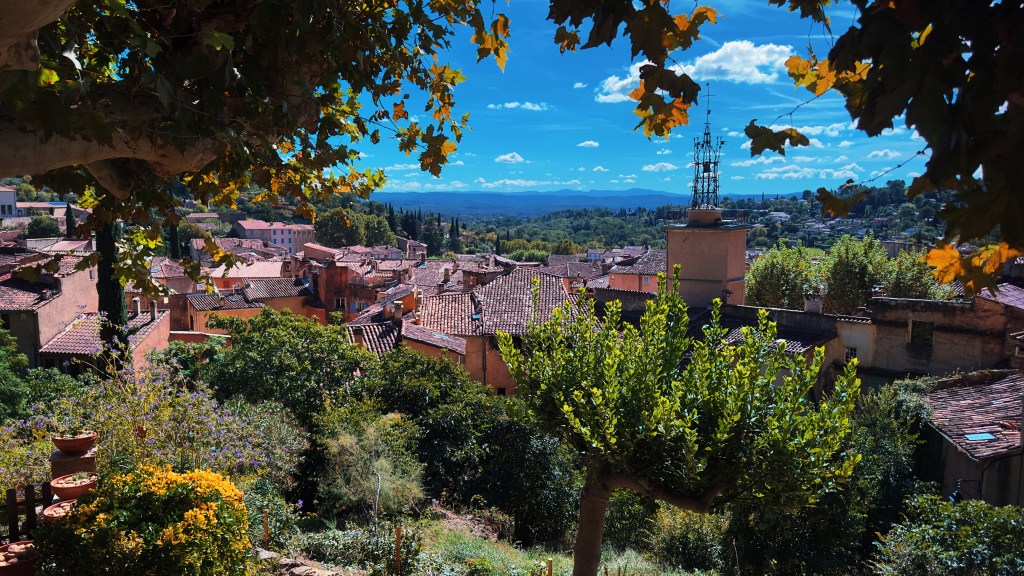
Troglodytes and a holy trinity of visions may translate to extraordinary hotel tariffs, but nothing, it seems, is ordinary in Cotignac. This medieval town, voted one of the prettiest in France, boasts picturesque cobblestone paths climbing to cliff-face fortifications, fabulous markets (including a flea market with the most envied fleas in the country) and, befittingly, a bakery whose profiteroles make all others seem a little passé. Opening the door to Lou Gourmandises is a superman experience, you go in as a mild-mannered reporter, and minutes later, the sky is the limit. Be warned, if you also indulge in an apple tart and an expresso, you might need a bigger cape.

Cotignac today is popular with British expats, Audi drivers and market lovers. Olive oil is a regional specialty and Brad Pitt is the owner of the local manor. But the town itself, with so much history and cultural association, is it’s own special place. At the end of the day, sitting in a cafe under the plane trees lining the market square and watching the world go by, is a singular joy.

A few hundred years has passed since Louis XIV visited Cotignac, but somehow I felt I walked in his footprint through the markets. Not with the same slippers of course, although with the gilding and the monogram he may have been more comfortable in my sneakers. But the calibre and variety of offerings – puppets, figurines, lamé scarves and glistening crystal – despite being somewhat plebeian, could still have sparked an artistic whimsey to entertain a sun king. His purpose of visiting, with his mother, was to give thanks for his birth. I did the same, thanks Mum, let’s see what we can do next…

Posted in bakeries, events, Fun, markets, travel | Tagged , , , , , , | 10 Comments

To market, to market…

Small village, big heart. It’s been beating for 4,500 years, welcoming galant knights and devout pilgrims with hospitality that anticipated the ages. The surviving chapels and medieval wash rooms bear witness to their passing, a situation these souls must eternally regret, for they didn’t live long enough to enjoy what would become Le Val’s triumph, the Friday morning market.

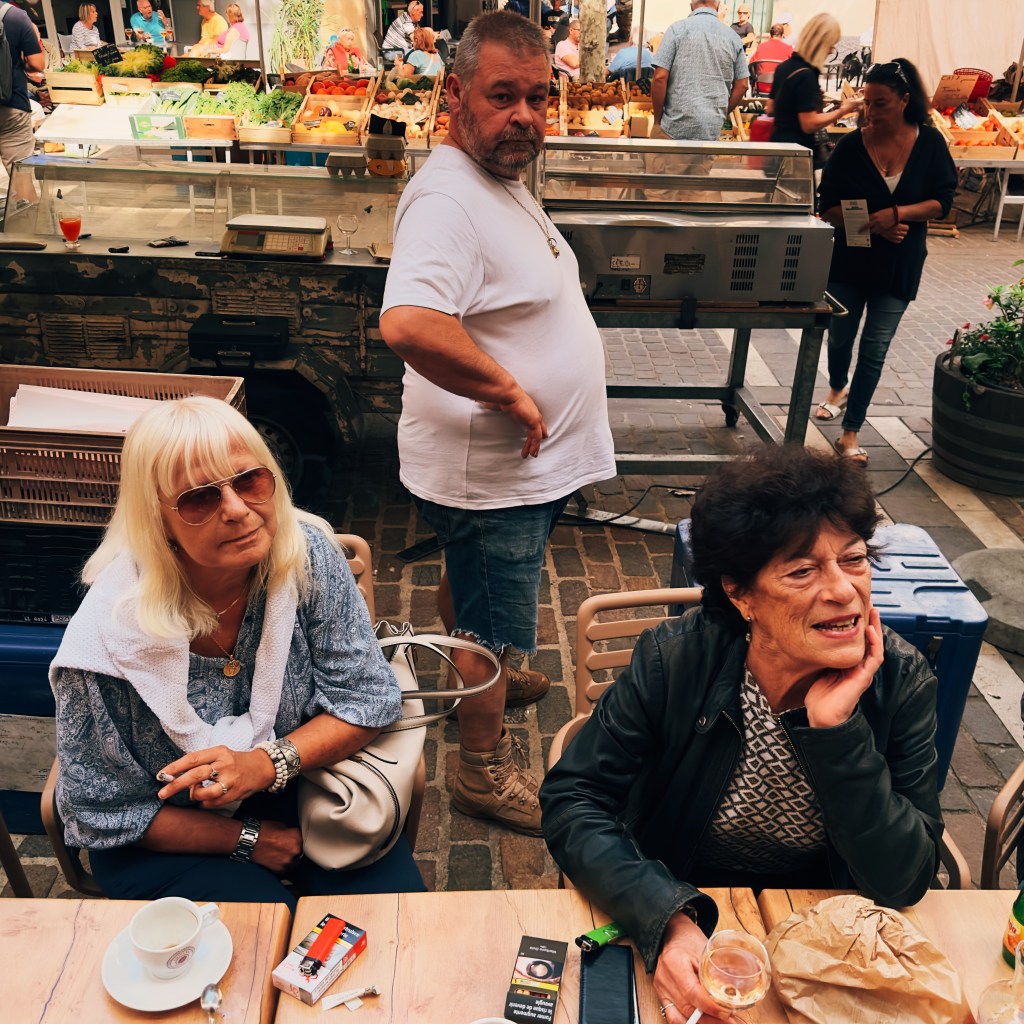
Fresh seasonal food is the essence of the business, with a handful of stalls selling fruit & veg, cheese, rotisserie chicken, honey and olives. Clothing on the corner has some fabulous looking leopard skin pants, which are being considered, although there is never hesitation with olives. The vendor greets me with a cheerful ‘kalamata!’ every week, and who can resist this prelude, and accompaniment, to tipple time at the cafe. The carefully coiffured elders of the al fresco cafe are regulars, as we modestly have become for the summer. Nel, tattooed and trim, holds up two fingers when she see us, and luck finds us a table on the crowded square. Tables grow and contort as friends find each other and shuffle for space. That’s the thing, Friday mornings are a permanent date, if you want to catch up with friends, that’s where you’ll find them. 

Provencal markets are a reason to eat (and drink), to get up early and to go without a list. Almost every town has one, but the guide will never do justice to the ambiance and simple pleasure of being there. Two stalls or twenty, the unexpected will reward your efforts. Last Saturday in Brignoles we were surprised once again by the offerings at the boucher of the ever gracious Ismail. Hooves and heads – who would have thought? 

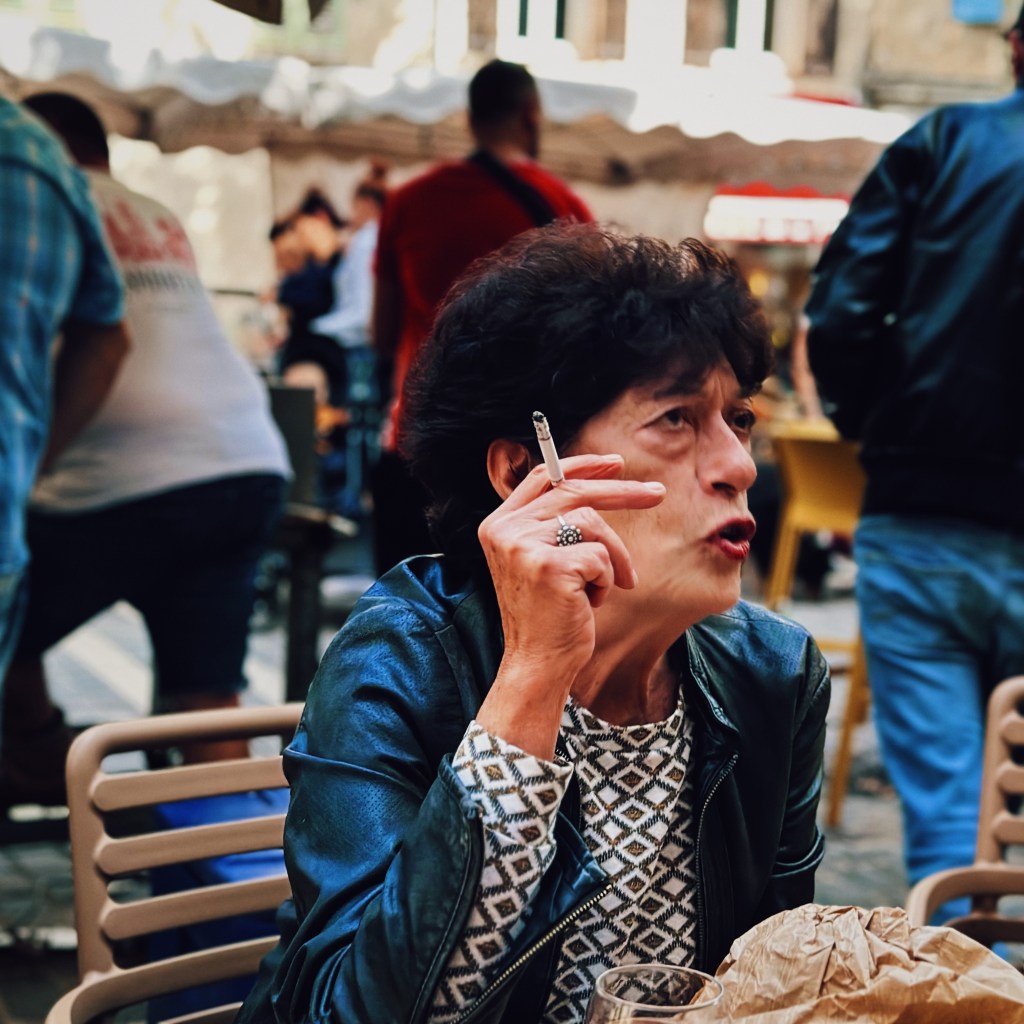
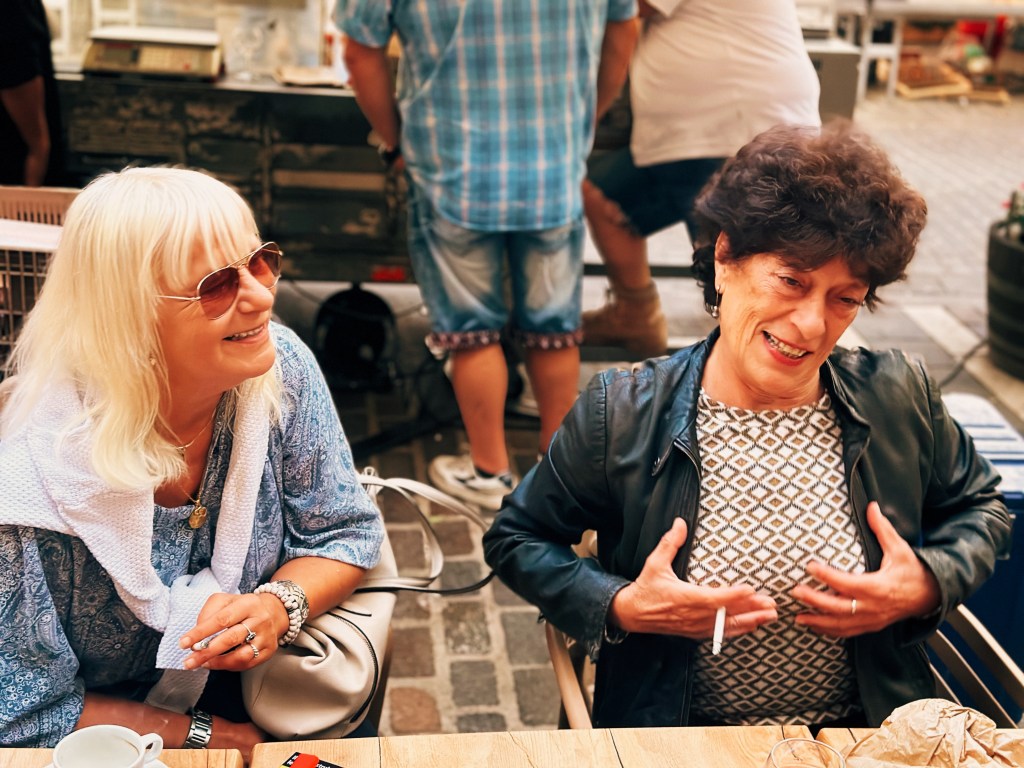
Markets have a soft caramel magnetism I cannot possibly resist. And who would want to? In Le Val on Friday morning I asked a group of friends if Sean & I could take their photos to give a picture of market life to Australia. There was no hesitation, we signed and laughed our way through conversations about the long friendships around the table and visiting Le Verdon (north of Bras…). It was heartwarming to share such camaraderie – a copy of the photos was not necessary but there was a request as we departed – Bonjour à nos amis d’Australie !

Posted in Food, Fun, markets, travel | Tagged , , , , , | 8 Comments

Helicopter farming

The spinning world of french roundabouts entwined with google governance can definitely lead you astray. In the 45 kilometre journey south through the Var region, our trusty rusty Citroën was reduced to a snail’s pace as we followed directions through at least 44 rond points connecting highways and bumpy country lanes in pursuit of a ‘helicopter’ farm. Or as the French would rightly call it, ‘hélicicole’, a snail farm. It was worth every anxious deliberation, when the worse that could happen would have been to end up in Nice, pas de problème!

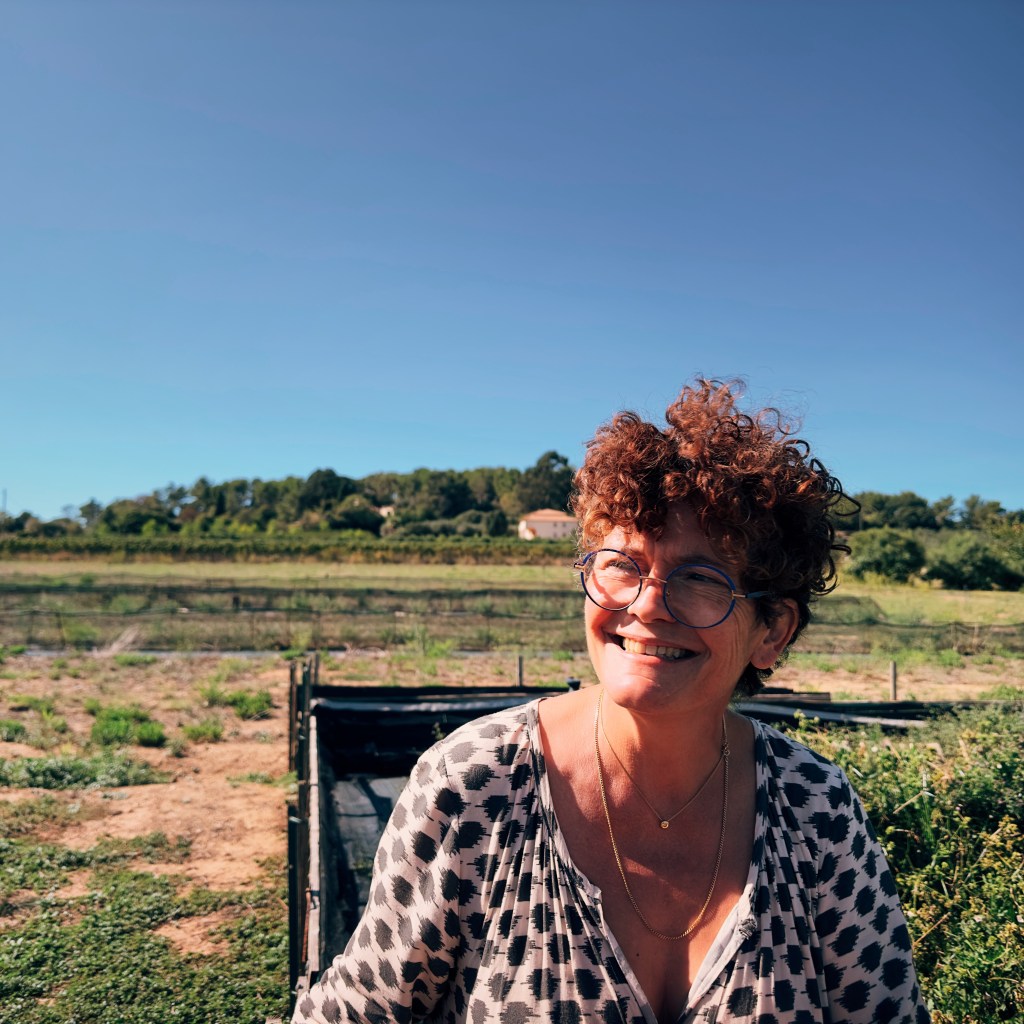
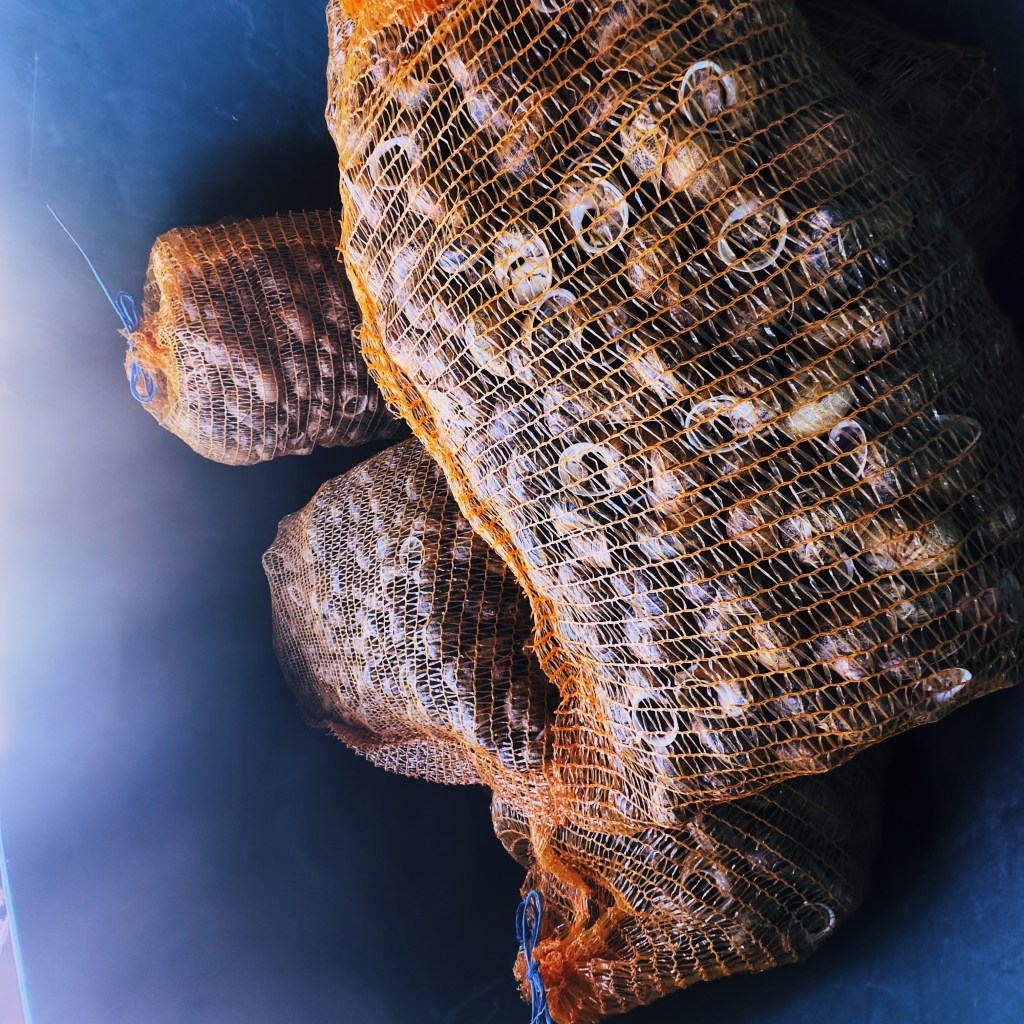
Christine Wattelier was an optician in a previous life, and her vision, along with a rich sense of humour, makes her now a very successful snail farmer. One of 340 hélicicultrice in France, her property is a short distance from the ocean where visiting cruise liners and the French navy dominate the famous coastline. Remnants of her parent’s life in horticulture blossom in the organic snail beds, now almost empty much to Christine’s dismay and relief. She would have like to show how big and healthy the snails were – all 200,000 of them – but has just finished processing 80 kilos, the last of her 1.5 tonne harvest. The quantity seems unimaginable until you see – and smell – the shells, all waiting to be cleaned.

‘The snail transformation is where we make a living’, says Christine, these creatures pass through her hands seven times from beginning to end. That’s a lot of work. February to May is the growing season, any later and they run the risk of hot weather (as happened 2 years ago when 90% of the population was decimated). During this time they have the protection of Dali, the surrealist scarecrow, and the native plants grown during the 6 months ‘crawl space’ when the soil rested. The snails are then collected and placed in a 5/6*C cool room, where they go into hibernation, fasting for 7 days before being shelled. The meat is processed – only the ‘feet’ that is – the shells are cleaned, the meat cooked using various recipes with oil rather than butter, and the shells refilled. The whole process is strictly controlled, hygienically and humanely, one foot to one shell.

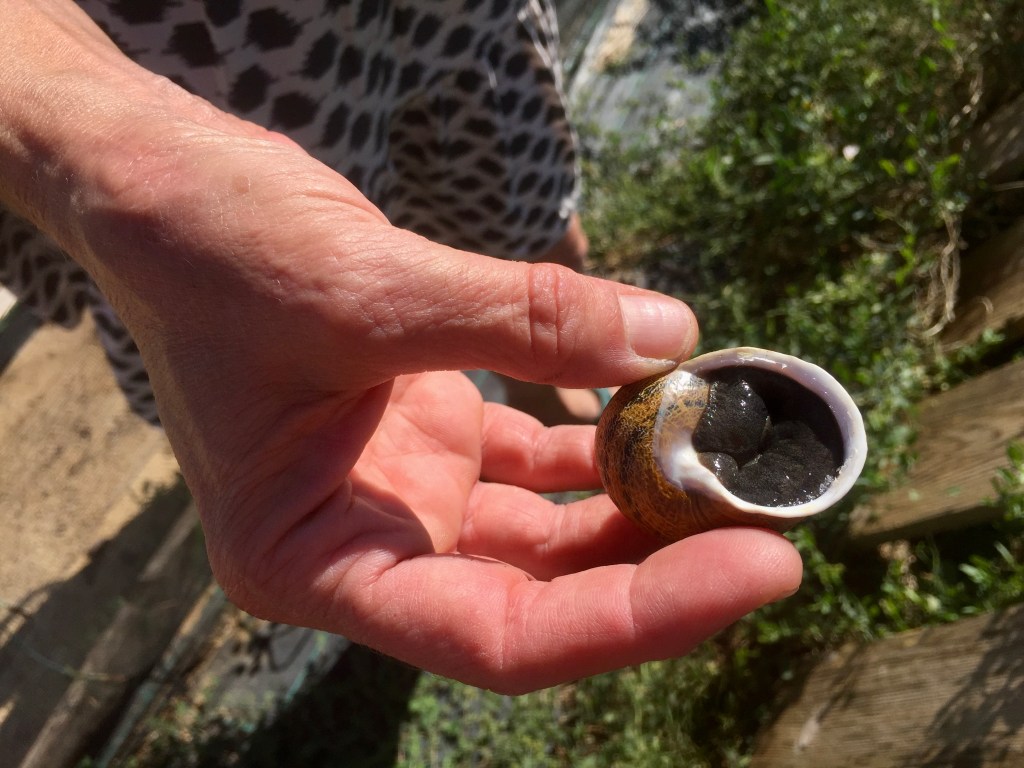
In all my years of telling stories, I have never encountered a culture of food I knew so little about. But despite being filtered through google, Christine’s pride for her snails was evident (even seeking out a wayward surviver in the garden beds to tickle & reveal how it breathes) as was my recognition of her commitment. She is a farmer, breeder, cook and merchant, and in the summer runs snail & wine evenings as well. The craziness of the work does not escape her. ‘I have to remove the snails to cook them, clean their shells and then put them back in the shell – it’s an upside down world!’

Posted in Uncategorized | Tagged , , , | 4 Comments

Goats & glace

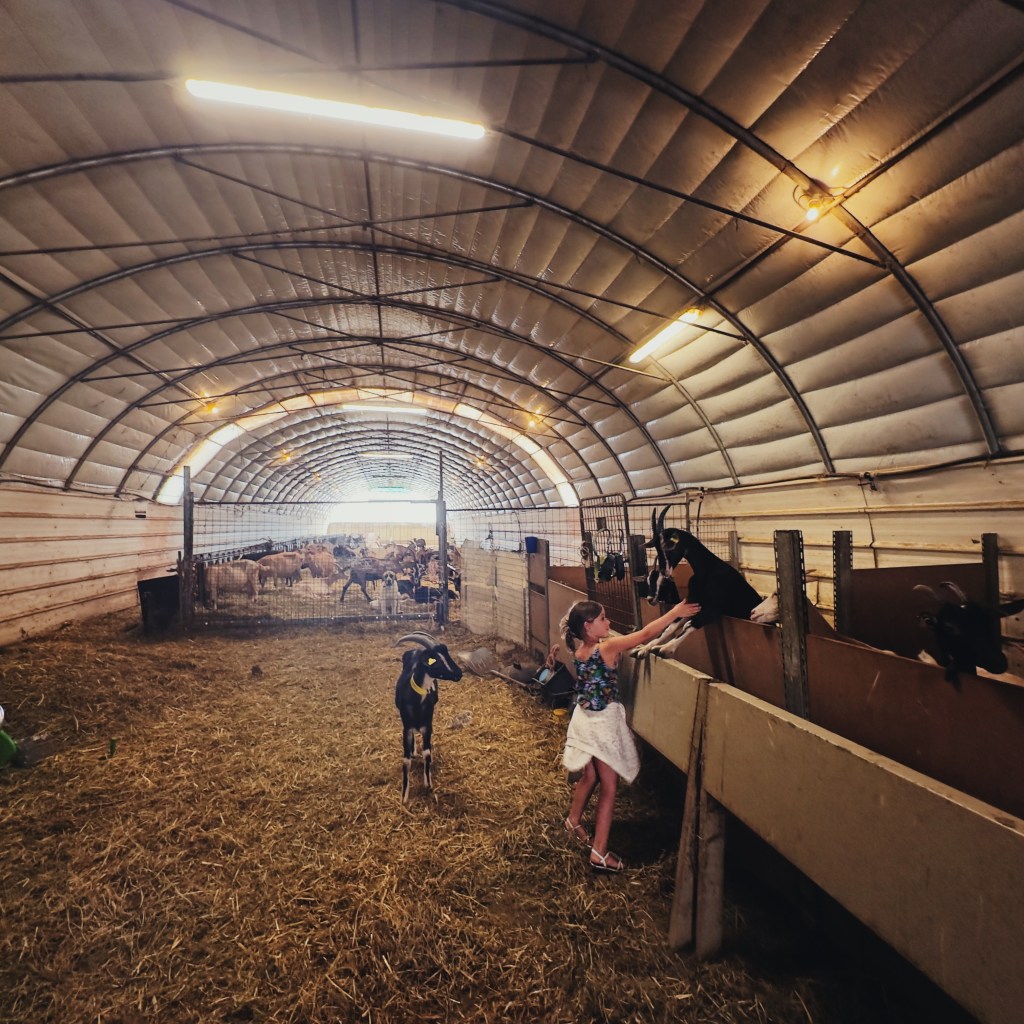
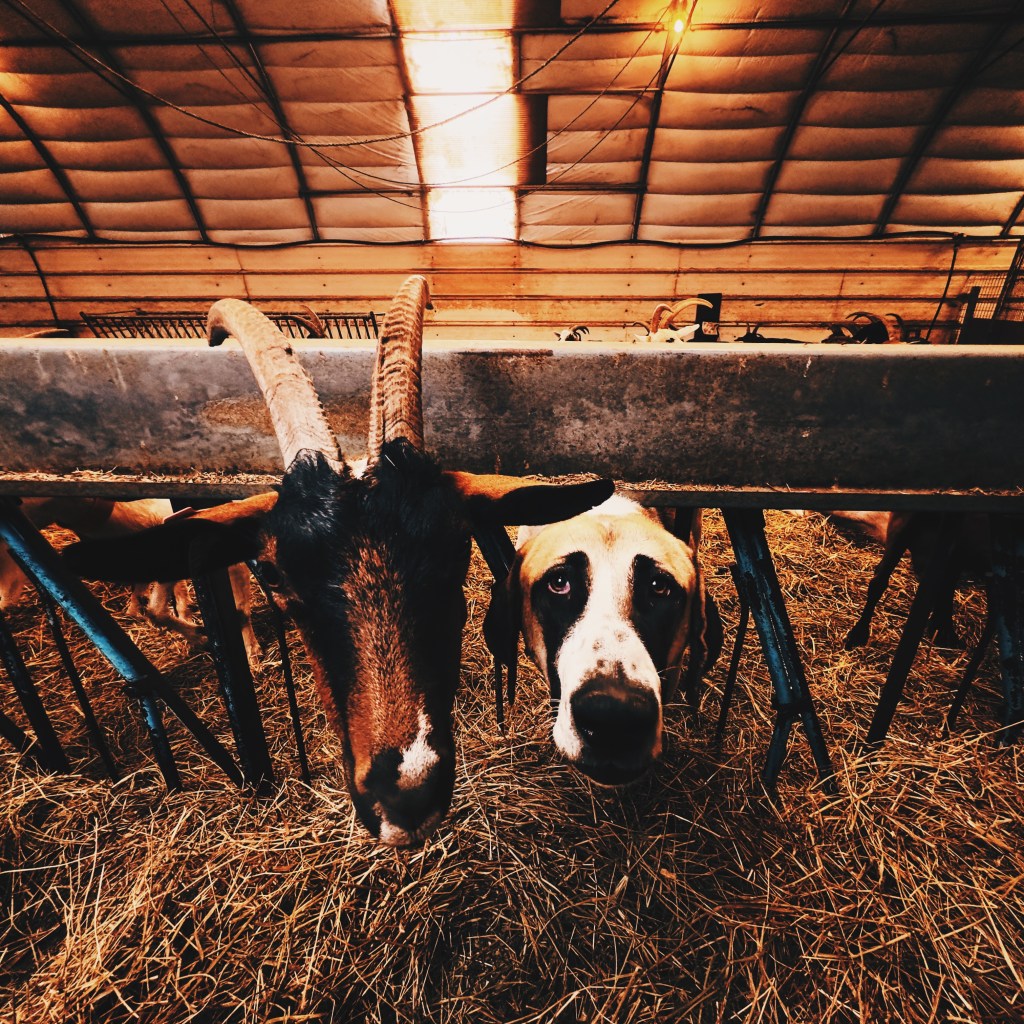
To say that fresh goats cheese will last days in the fridge is about as ambitious as saying a tub of hand made ice cream will survive the journey home. Especially when both delectable treats come from La Ferme des Jovents, an extraordinary source of inspiration near Saint Martin de Pallières in green Provence. Driving into the hills this week, under clouds threatening to break the spell of summer heat, we were welcomed by an Australian Kelpie, a beaming Brisbane-accented French woman, and her indefatigable son in law, Rudy. Lucky for us the goats had been brought in from pasture to the protection of the shed, so we also met the Saaneen, Poitevine, Alpine and the renowned Rove goats with the twisted horns, all in the company of the biggest dog I have ever seen, a Portuguese specialist in wolf deterrence. Only a cheeky goat appropriately called ’the escapist’ greeted us outside the confines of the pen, following us around as though in expectation of conversation. Certainly the goats seem accustomed to being included as part of the family, and by virtue of the farming calendar, most of them are born Aquarians, not water but milk bearers, highly intelligent and creative. They are definitely members of the team.

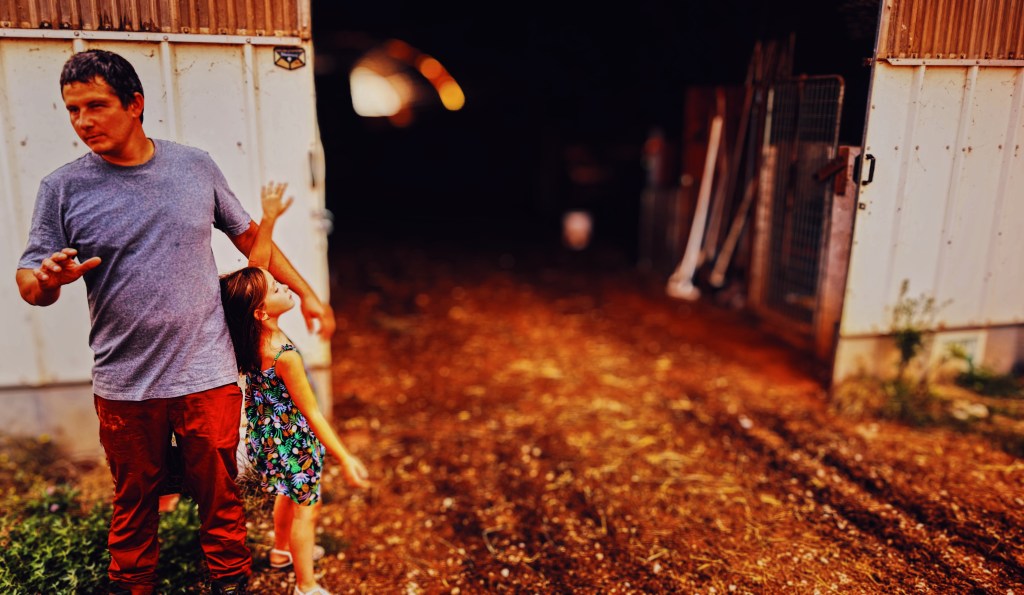
Rudy is a passionate young man. With his wife he works 16-18 hours every day, milking morning and evening, travelling to markets and opening doors in the summer to customers and curious foodies like us. The farm was not inherited, this is a choice to live and work passionately with 100% natural processes, and Rudy, supported by his family and a healthy herd, undertakes the task with tenacity. When free range summer pastures give way to winter, the goats are fed the appellation controlled hay of Crau, a premium mix of 25 grasses and flowers. The diet gives organic credence to the ‘green’ branding of Provence, and while goats may have a reputation for eating anything, the better they live, the better everyone lives. At the peak of the season 200 litres a day translates to raw fresh milk or yogurt, cheese and ice cream. I am a committed cheese lover, but never have I tasted such gossamer light, subtle and delicious cheese. It is the kind of indulgence someone looking for an authentic French experience would drive around the country for days, nay weeks, in pursuit of. And then there’s the ice cream. I used to think the prune and cognac ice cream freshly made at the Sydney Regent back in the 90s was spectacular, I thought the gelato at Giolitti’s in Rome was primo (actually I still do) but the Pastis glace that Rudy & Camille make is out of this world. Completely original in texture and taste. You could almost think it is sorbet until the glace’s creaminess curls into an anise apéritif. 

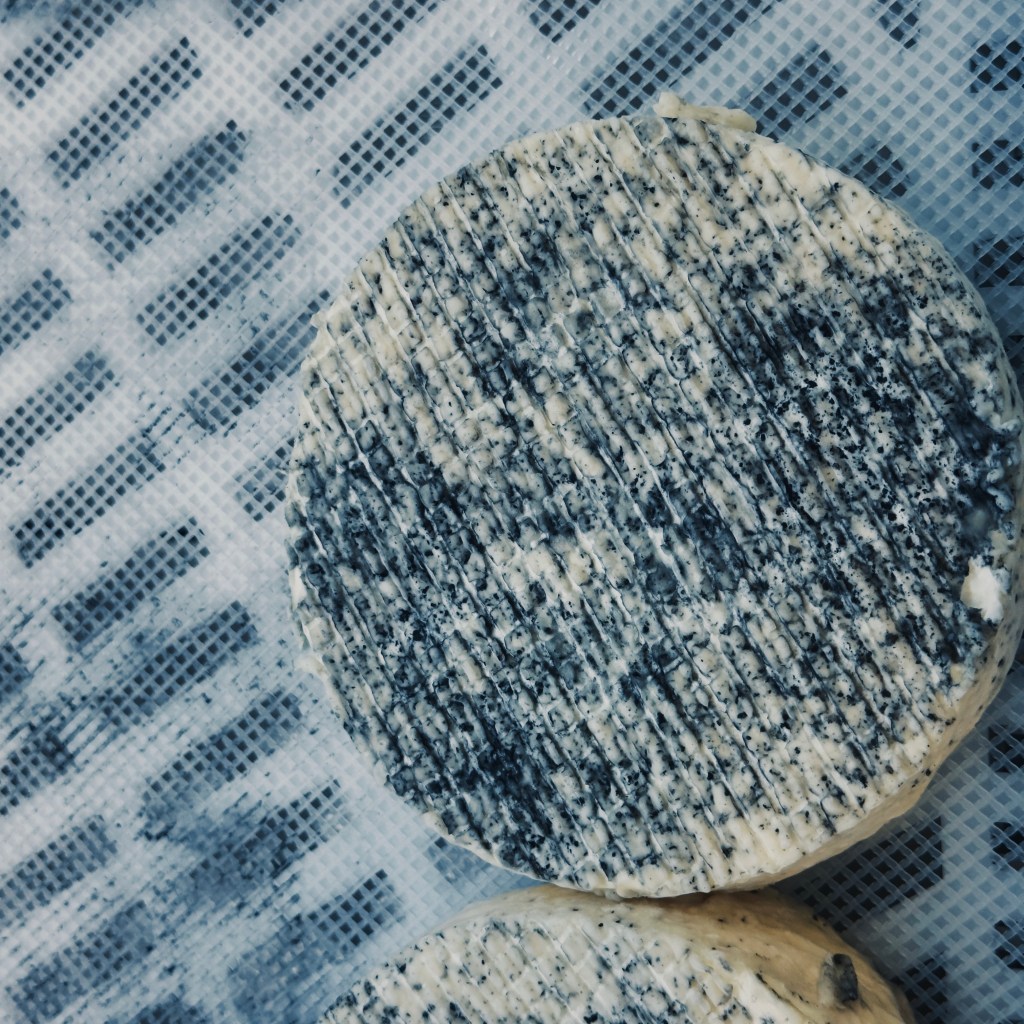
Ice cream is a pleasure project for the farm economically. This is from a couple who work seven days a week, and still find time to hitch horse to buggy to take the local children to school on their first day. This is also a place that respects the ‘afinage’ of cheese, the development of flavour that occurs through carbon or salt with age. While my French is dreadful, I will find a way to use this word in a broader context, not least to describe Rudy’s 88 year old grandmama. What a treasure! As we gathered at the end of our visit, she wished, preciously, that we could all speak the same language. I held out our cheese and ice cream and said…  maybe we do. 

Posted in cocktails, Food, Fun, markets, travel | Tagged , , | 8 Comments

Rosé coloured glasses 

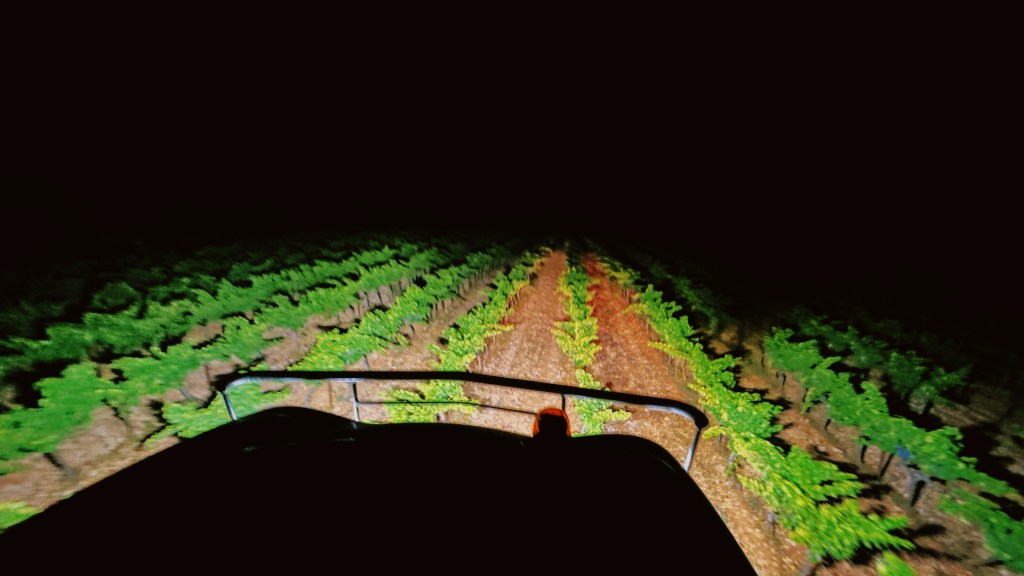
A grape grower in Provence needs more than a good nose. Being nocturnal helps, as does a farmer’s patience, hard work and instinct. Membership in the local wine co-op is also a distinct advantage, providing for families an economic embrace that rivals the power of a Grande Domaine. But nothing, not one thing, will be of any value without a solid reversing technique on your tractor. This is the cornerstone of viticulture, the unpublished curriculum in oenology, the secret ingredient to winemaking success. Because if you can’t get your grapes into the winery in the first place, you’ll never get to claim that fabulous wine as your own.

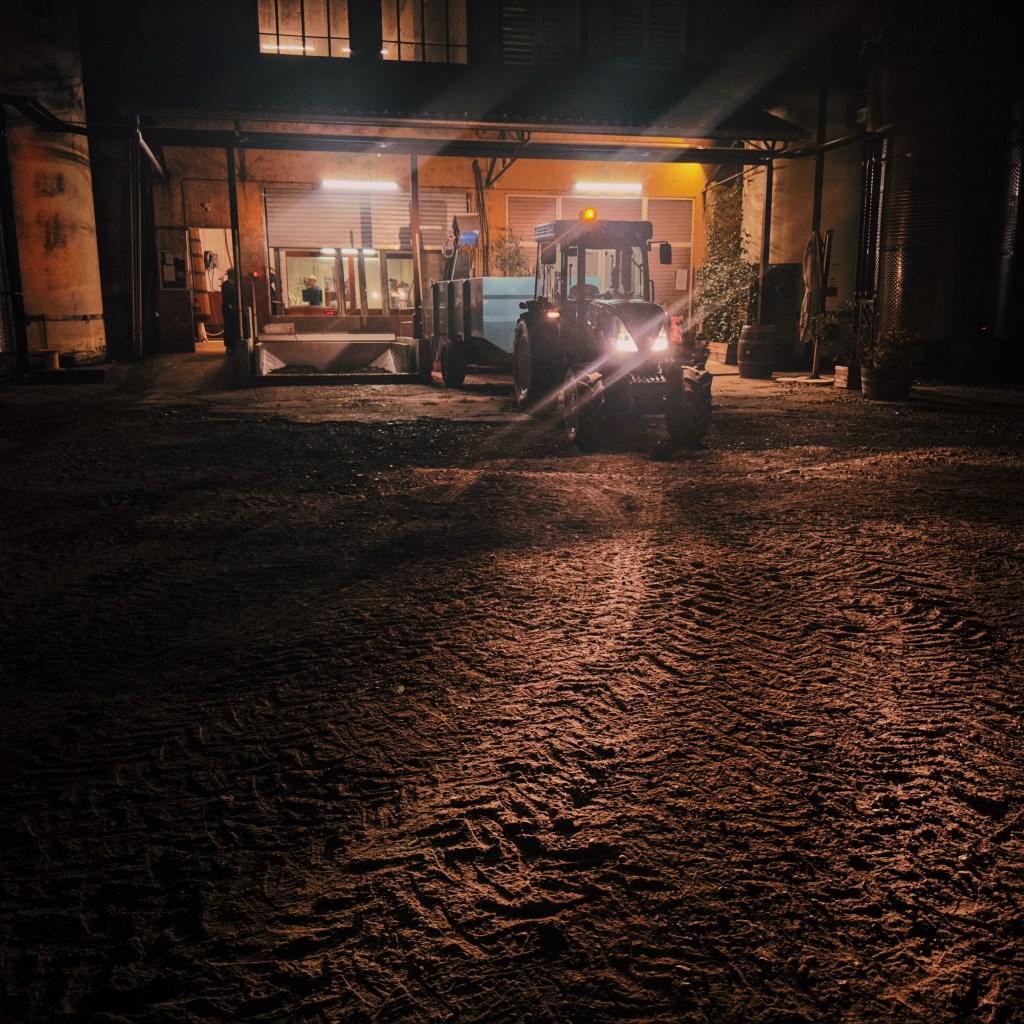
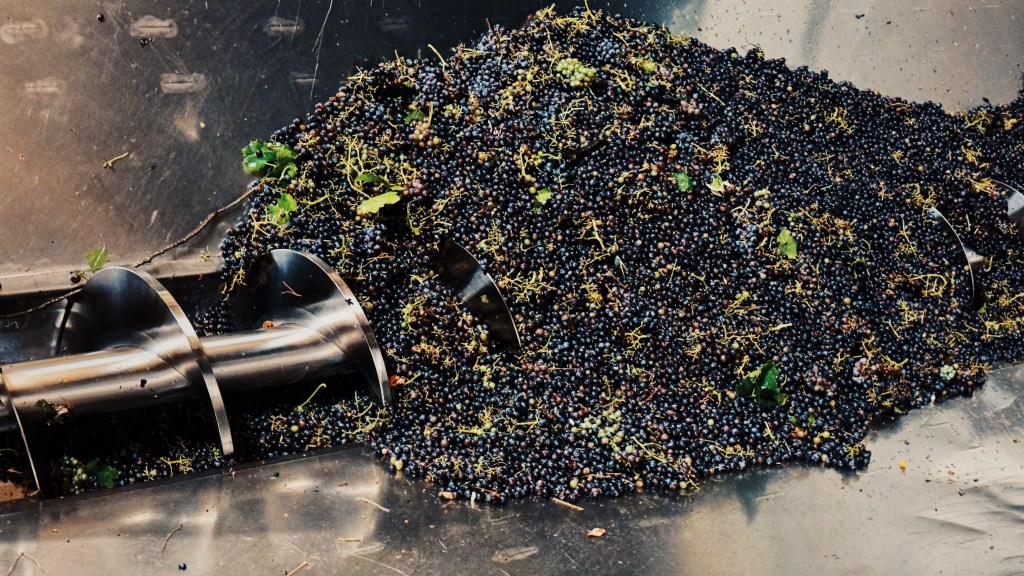
The romance of rosé roused Sean & I at 3am this week to drive into the dark limestone hills of Correns. The lingering heat of the summer threatened the delicacy of the vintage, so grapes had to be picked in the cool of the night and transported immediately to the winery. Brightly lit tractors, laden trailers in tow, were already on the road, leading us with well practised manoeuvres through the town’s narrow streets to the buzzing winery. Rosé rush hour. As one tractor reversed to release a glistening mountain of grenache into the crusher, another repositioned his trailer to collect the stalks of his deposited grapes. They signed off their loads, and then raced off to collect another.

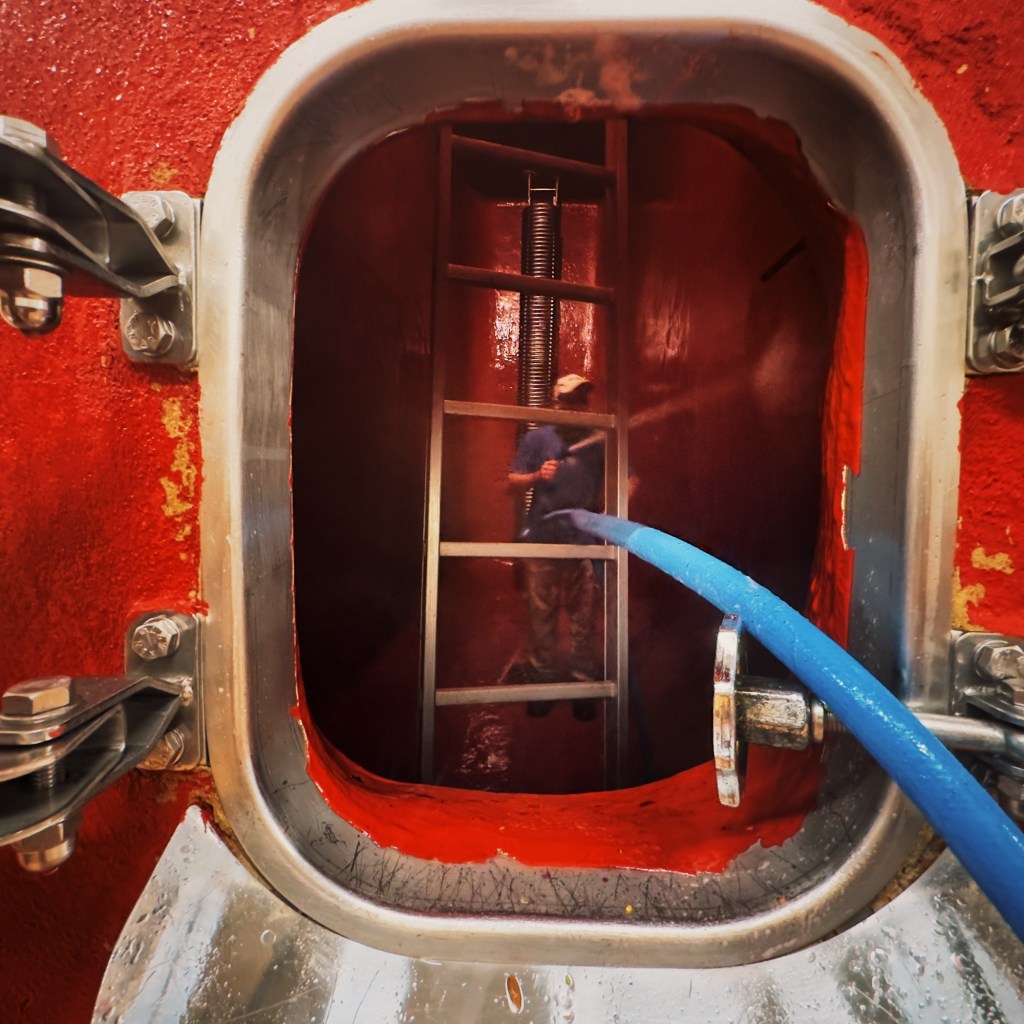
The winemaker was expecting us – although not my cake – saying he was looking forward to a jambon ‘dinner’ at 8am. The generosity of his time for us was all the more precious considering his multitasking with the overnight team of 3. Grapes were 18C on arrival, which had to be reduced to 8C for optimum results. The quality of the vintage would depend on the action of these few days, and there were 30 growers in the coop depending on them. When I asked Julien what would the wine be like if the heat won, he grimaced with one word – orange! 

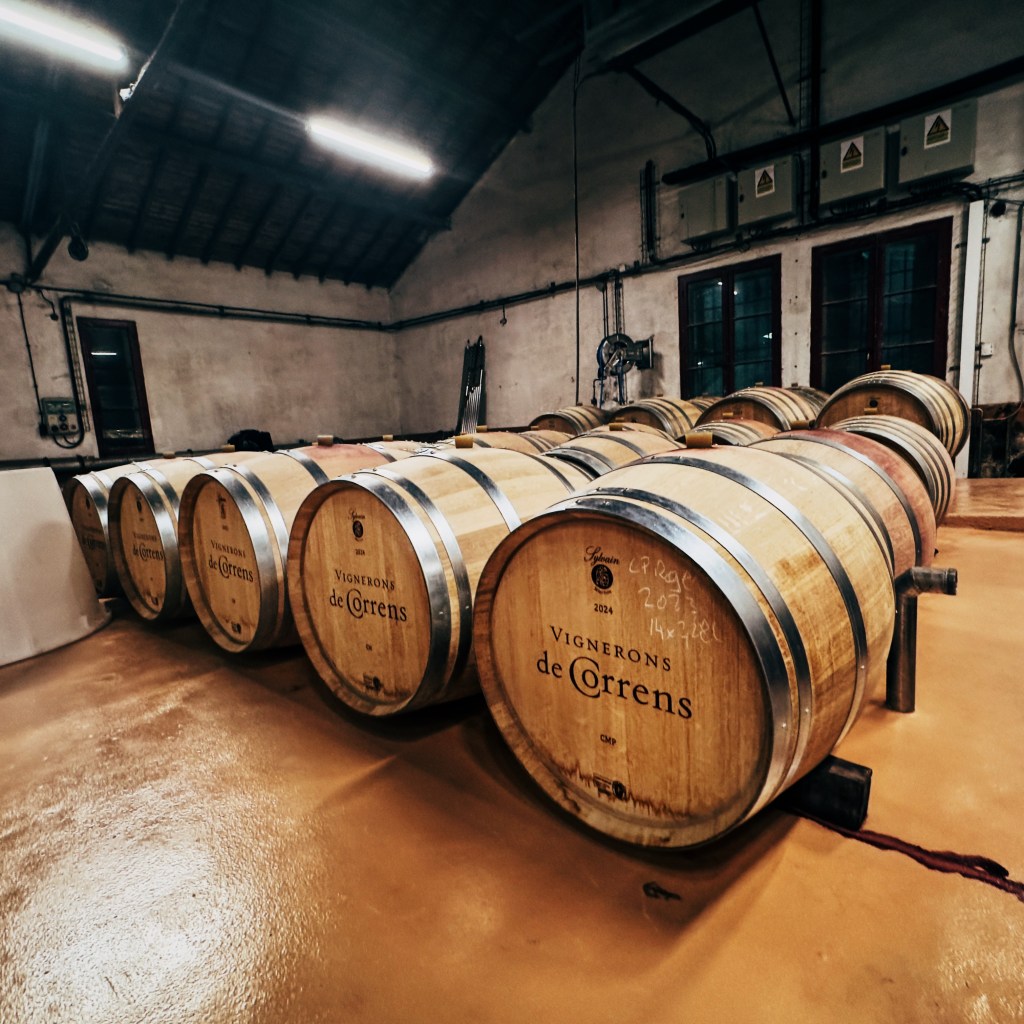
The vineyard is 100% organic – Correns was the first official organic village in France – and solar panels on the roof provide all the energy the winery needs. In this modern mission, backed by state of the art equipment and technology, camaraderie adds the magic. As did Christophe when he invited us to his vineyard. Following him along a winding country road, the night sky full of stars, we were suddenly confronted by a huge luminous creature gorging grapes in the dark. The sight was breathtaking, a dazzling harvester whirring over the vines, a sticky whirlwind of juice spraying in its aftermath. So this is where the wild things are! It was all we could do to jump on board and take a ride.

It is worthy that ‘culture’ is included with the word viti to describe the work that ultimately gives us wine. In this part of the world the words are one and the same, rosé is synonymous with Provence. The altar wine at the 18th century baroque style church in Correns is apparently the envy of the region – we called in to light a candle for the vintage, and for all those patient driving instructors who will ensure a rosy future for this special place. Santé!

Posted in travel, Uncategorized | Tagged , , , | 5 Comments

Medieval village, modern life

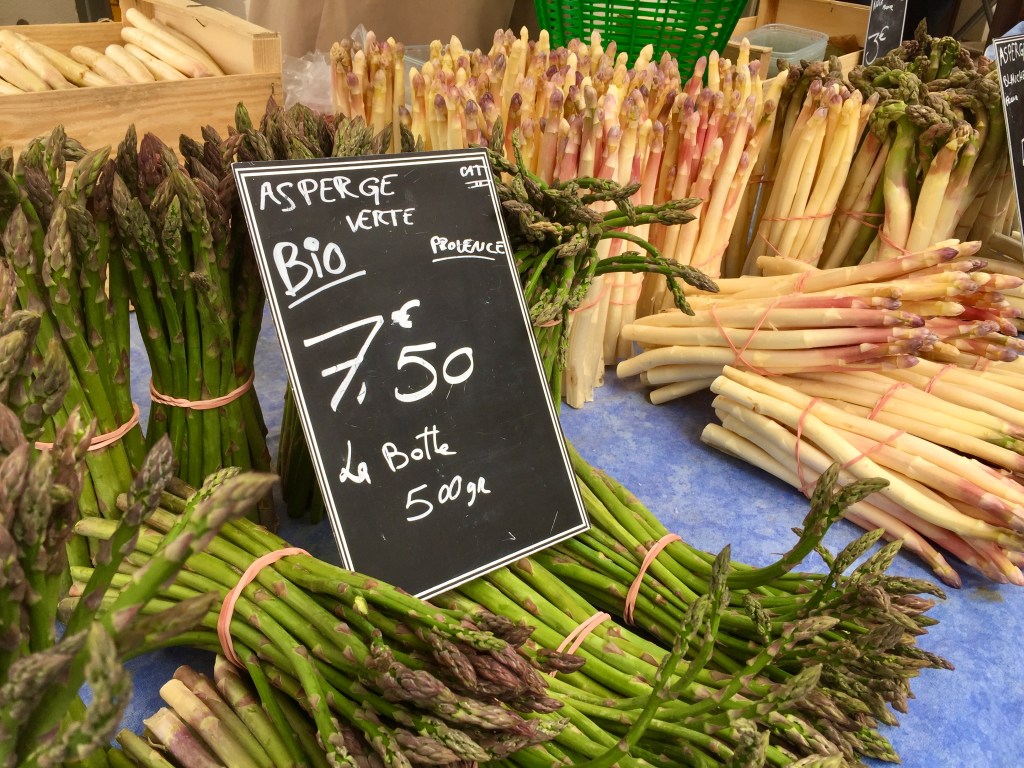
First horses, now bulls, a bakery that has been making communion wafers for Lourdes forever, and a market that makes visiting the artist town of Pernes-les-Fontaines worth it’s weight in asparagus. White or green. 

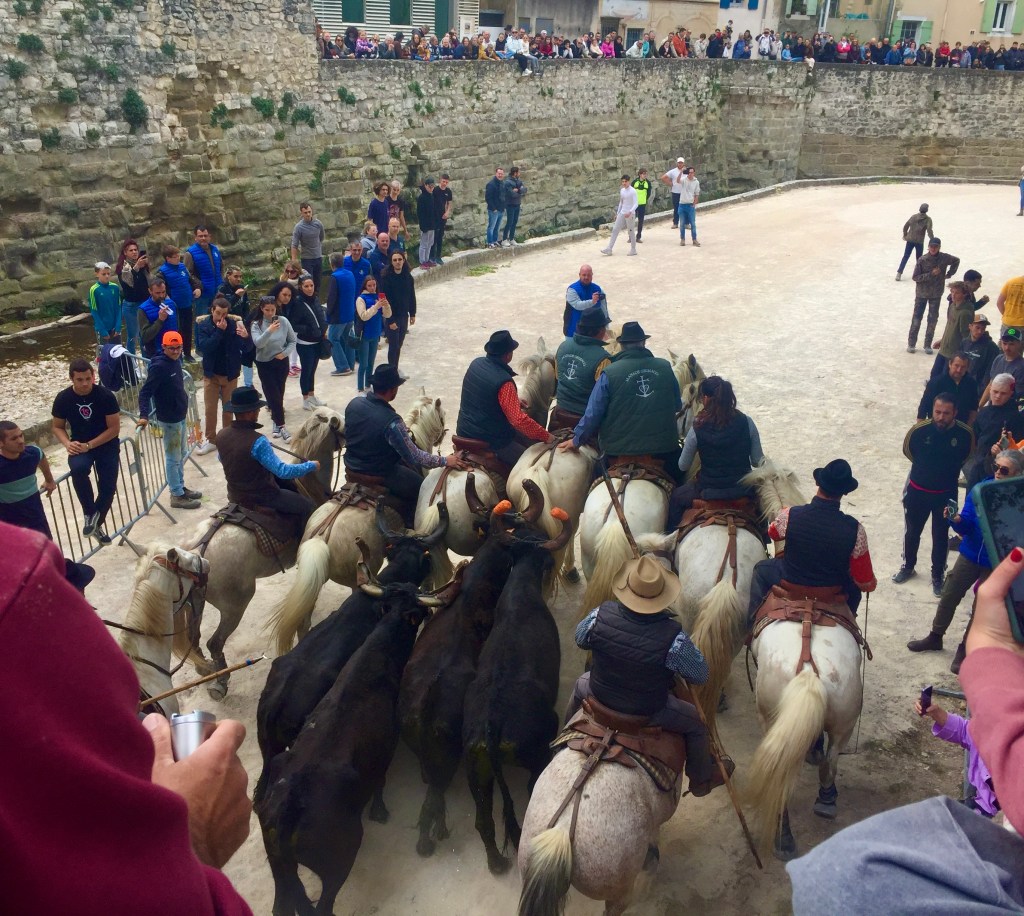
Who knew that Provence has a tradition of bull running? There are two sides to the story, both rated G, no blood involved. In the Spring when the markets are bursting with goodies, the river bed in Pernes becomes a showcase of skill. Legendary white Camargue horses lead a pack of horn-wrapped bulls through a crowd of young people who admire but nevertheless take challenge in grabbing the bull’s tail and forcing it to the ground. The horses, field-friends of the bulls, protect their cousins. The children, holding forefingers at each side of their head to mimic the bulls, wait for the moment to charge, a rite of passage that could lead to them becoming ‘raseteurs’ in the arena. Being a professional gives a financial reward, for the risk, and for the success of raking a feather from the head of the bull without losing an arm. Did I say no blood? This is not a bull fight in the Spanish sense, the bulls go home for another year of field work, while the raseteurs go on to become dancers or high jumpers. Everyone wins.

The local convent, meanwhile, continues their century old tradition of making communion wafers for the church. It’s a busy time before the bull season, and it’s god’s work. If the bread sold in the old bakery next door is any indication of their craft, I’ll be standing in line come Sunday.   

Posted in Uncategorized | 11 Comments

Skippy V’s Mr Ed

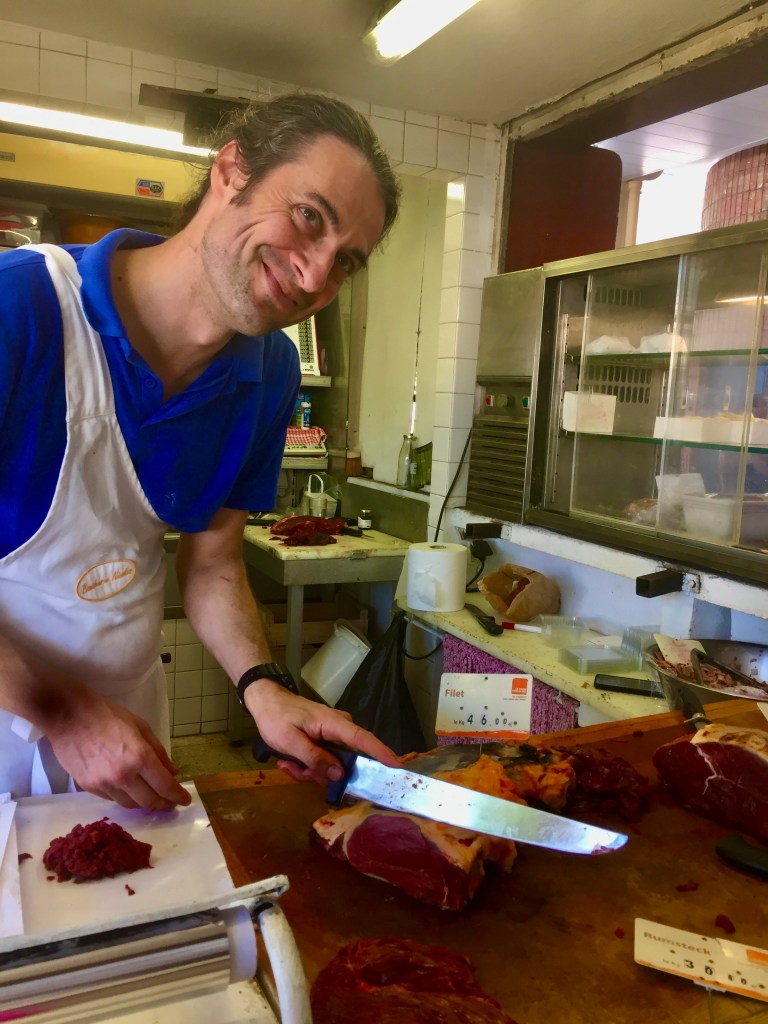
A horse is a horse of course, of course! Nothing speaks to me quite like the recent discovery of cheval at the local Saturday markets. While I’m called to new taste sensations, they don’t generally evoke a jingle or twinge of hesitation in their purchase. Not like horse. Years ago I spent my first white Christmas in France with friends whose mother made delicious lapin in white wine and cream sauce. Unbeknown to me it might have been a different first experience, as I recently discovered Madam Fouquet could also buy horse meat at the markets if she arrived early enough. I was delighted to find this chapter of traditional cuisine still thriving in a generational stall in the heart of Green Provence. Delighted and challenged. The stall is a permanent feature in the midst of a 6 day carpark, that on the seventh day becomes a maze of seasonal temptations stacked perilously on fruit boxes. Magically everything disappears at the end of the day, except the longstanding tiled boucherie chevaline.

The family’s son was proud and enthusiastic about our carnivorous curiosity, it seems horse meat became a menu item through economic necessity (Napoleon preferred his spiced with gunpowder) but more recently is a specialty item with a contested future. I have tasted kangaroo despite being a fan of Skippy, so why my hesitation with horse? Maybe it’s because Skip didn’t have quite the romance of Black Beauty or Hi-Yo Silver, and there are certain childhood memories that should perhaps remain intact. After all, what would Mr Ed say?

Posted in Uncategorized | 1 Comment

Perfection in Provence

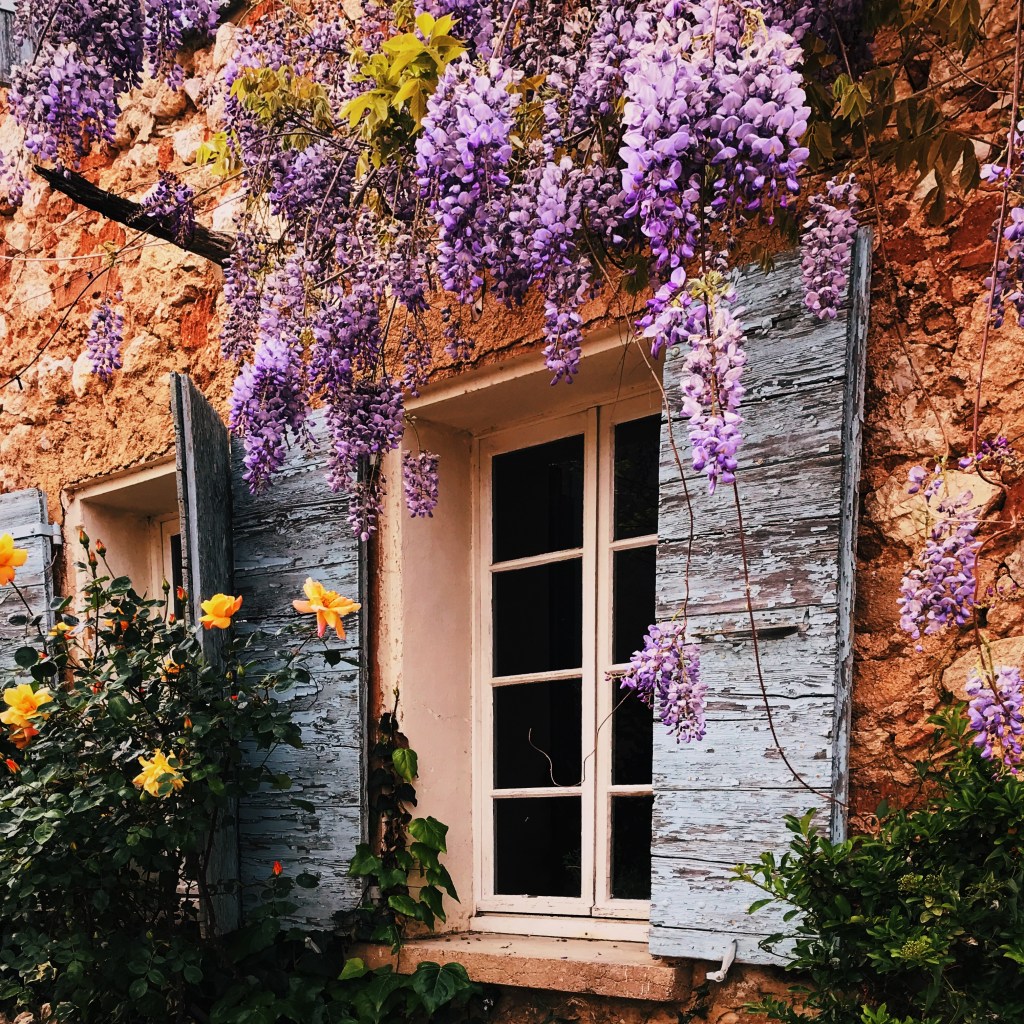
Provence is too perfect. Immaculate fields of lavender undulate with swathes of pastel around medieval villages. Cottages feature bluish-purple shutters that hang like proud flags on white walls, draped with wrap-around wisteria above perfumed yellow roses. Cherry trees, bejewelled with plump rubies sparkle between horse trails and vineyards. Red poppies turn fields and roadsides into magic. Church bells strike the hour from steeples towering above the village chateau from which vantage point there can be no modern distractions. No wonder the Impressionists found such inspiration here, no wonder Van Gogh went mad with the spectacle, no wonder Nostradamus could see into the future. 

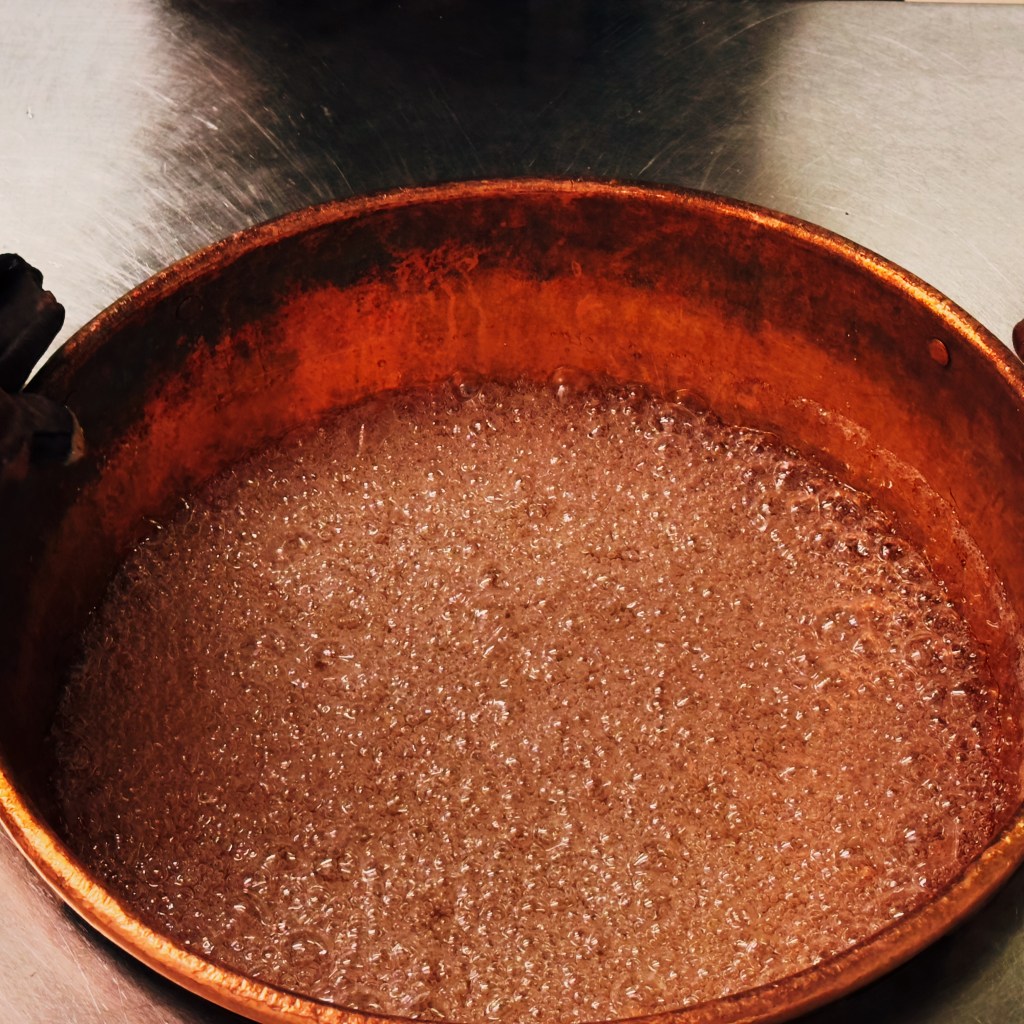
Actually these days Nostradamus is remembered not so much for his prophesies as for his recipes. In France anyway. From the heart of his alchemy he devised processes for replacing liquid with sugar in fruit, creating spectacular confiture, marzipan and nougat. What a genius! He paid for his wizardry by being expelled from university, but Provence has collected the royalties on his cookbook (Traité des fardements et confitures) these past few hundred years, and everyone claims to make their jellies and sweets from his original recipes. 

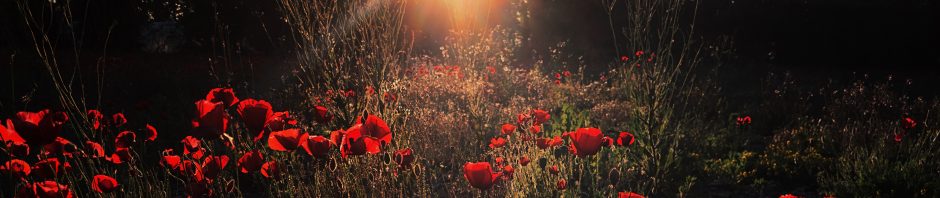
Perfection is a beautiful thing, which on the one hand can require bureaucratic manicuring (regulations on becoming part of a medieval village in Provence can be as complicated as the etiquette of playing petanque) but can also happen perfectly naturally. One evening we rode to a spectacular field of red poppies to capture the vibrant silhouette of the setting sun when Sean was disturbed by a man from the local farm. Thinking he was upset about our presence, Sean spoke with his eyes and hands about the beauty of the moment. Without a word the man disappeared, then came back a few moments later extending his cupped hands, full of big luscious strawberries. Then he disappeared again, just like magic.  

To visit Provence is to be invited for a picnic on Claude Monet’s bridge. Make sure you take the scenic route to get there, so you catch the best at the local markets and the early rising nougat makers, just as they stir the honey into the almonds. The smell will take you to heaven, where you will find an old wizard working on a new book, this time with copyright, and called Nostradelicious. 

Posted in Uncategorized | 10 Comments

My third Act

The Guardian has a section on ‘A new start after 60’ which I read with interest, but at the same time wonder about all the stories that have been lived but not necessarily published. I would love to hear yours! Here’s mine…

I always had a romantic idea about being on the road, not exactly like a gypsy, but Juliette Binoche’s role in ‘Chocolat’ comes close. Of course it wasn’t all cocoa and Johnny Depp. At 63 I found myself stranded by covid in Eastern Europe, unable to return to my native Australia or wanting to go back to my adopted NYC. Money from the film I went to Hungary to make was dwindling, as was the likelihood of ever going into production. Then Russia invaded Ukraine and all hell broke loose. It was time for a new start.

From a small farm in rural South Australia, my mother and a boarding school education taught me independence and to pack light. I studied literature, and took my Keatsian dreams off to Paris and London, where I carried plates for a few years, before returning home to the booming restaurant scene in Sydney. Every food market and taste sensation I had savoured on my travels nourished my appetite to manage and then own restaurants. It could have been a life’s work, but the opportunity to swop menus for Manhattan was too tempting. It was a serious plot development I couldn’t resist. 

With my photographer husband, Sean, we pitched for and created marketing campaigns for high end brands. Being Australian and always shooting on location with an authentic cinematic style gave us an edge. And the travel-with-purpose was exciting – tango dancers in Argentina, Holland Casinos, snowed-in Montana for Harley Davidson, the Faroe Islands, Vegas, the morgue in Miami… Every job was different, so I always felt like I had the wind in my face. Best of all, the productions fed a decade of my broadcasting live on overnight radio from where ever we were, sharing stories from the trenches with Australia. 

Fifteen years later the digital revolution changed everything, devaluing advertising photography but making motion more accessible. For Sean, tech was finally catching up with his cinematic ambitions, so with me as writer/producer we set off for film-friendly Hungary to make a show. I thought Budapest would be my third act. That after restauranteur and producer I could take the next step with story-telling, all my experiences being as yeast in a doughy drama. But between the Weinstein outing and covid, the industry crashed and our investors signed out. My optimism languished and my body aged, I felt increasingly old and woolly, landlocked and stuck, like everyone, in lockdown. Time was ticking away. Finally, one day in front of the pickled cabbage stall at the markets, I realised there was enough grey going on with my hair without eating grey food under grey skies.

The relief of being in your sixties is the cobwebs spun by guilt or regret from the past give way to the practical reality of living without a parachute. I had to find a way to continue going forward, to find a new unknown destination with as yet unknown opportunities to jump. An open door that would welcome our experience and modern approach. Work-for-accomodation platforms are relatively new, facilitating the travels of mainly young people in what are generously called ‘cultural exchanges’. In exchange for, say, harvesting olives for 4/5 hours a day, you get to stay for free in a room/caravan/cottage, depending on your luck with the honesty of the glowing profiles of potential hosts. In our case bad luck was good luck.

Within the first two months of arriving in South Tyrol I felt 10 years younger. Long hours weeding, building stone walls and pushing a wheelbarrow up and down olive terraces transformed my body and my mind. The transformation was complete by the isolated bubble our hosts, Fritz and Freida*(not their real names!) enveloped us in. They were hard masters, ‘masters’ being the operative word. We were taken back more than a century to the culture they perpetuate now by living in defiance of (or perhaps because of) historical, geographical and social change. South Tyrol when it was part of German speaking Austria/Hungary, when there were servants. Weirdly and ironically Fritz & Freida provided the spark of an original story about entitlement that in turn inspired a script, and now the production of a pilot. But in another place thankfully. 

My third act is up and running. We currently house-sit overlooking the Mediterranean on the edge of a small generous-hearted community, surrounded by spectacular Tuscany. It is the kind of place you dream about at 16, not expecting to be living there 50 years later, or that the picture-perfect location would be central to the making of a TV pilot that we are creating together. The whole town is on board – harmonica players, tattoo artists, ship builders, bakers & gymnasts. There is still a long way to go, but the proof is in the pudding, and there will be magic in the second slice. This isn’t just a new start, it’s a whole new adventure. Questo posto è magico! 
Posted in Australians at large, travel | Tagged , | 48 Comments